|
|
|
|
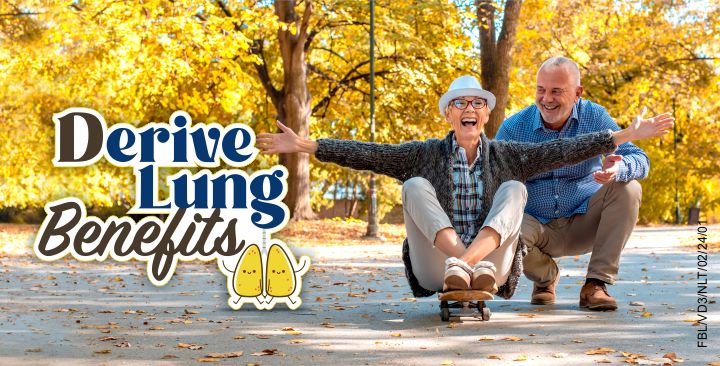
Vitamin D has a notable influence on infectious diseases, autoimmune diseases and respiratory tract infections suggesting its significance on not only skeletal but also extraskeletal diseases. Vitamin D is crucial in the acquired and innate immune systems as proven through many research. Fermenta, one of the largest manufacturers of Vitamin D, brings to you this Newsletter on the latest research of Vitamin D in Respiratory Illness.
|
|
|
Vitamin D might be inversely associated with chronic obstructive pulmonary disease (COPD) risk
|
|
A large, prospective, cohort database study analyzed the relation between Vitamin D levels and COPD risk. Vitamin D levels were classified into different quintiles and HRs were estimated against 4th quintile (51.8 to <64.6 nmol/L). Among 4,03,648 participants, the lowest Vitamin D level of <31.7 nmol/L increased the risk of COPD by 23% in total participants, 25% in never-smokers, 23% in smokers, overall death by 38% and COPD-specific death by 57% Vs. 4th quintile. The risk of COPD was the lowest at 55 nmol/L of Vitamin D.
|
| Zhu Z et al. BMJ Open Respir Res. 2023 Jun;10(1):e001684 |

|
|
|  |
|
|
|
Vitamin D sufficiency might improve symptom control in bronchial asthma
|

|
|
A hospital-based cross-sectional study determined the association between Vitamin D level and bronchial asthma among 64 children up to 15 years old. Around 81% children had hypovitaminosis with mean Vitamin D level of 13.76 ng/ml. Among those with hypovitaminosis, 63% had deficiency and 19% had insufficiency. Higher rate of daytime exacerbations (>2 in 1 week) and higher incidence of nocturnal symptoms (>3/month) was seen in 31% of hypovitaminosis patients. Also, 5-fold and 2-fold more patients with Vitamin D deficiency and insufficiency, respectively, required rescue medications (>twice/week) for symptom control than sufficient group. |
| Bhat KG et al. Indian J Public Health. 2023 Jan-Mar;67(1):3-7
|
|
|
|
|
|
Vitamin D deficiency might be a risk factor for developing tuberculosis (TB)
|

|
|
A cross-sectional study examined the association between TB and Vitamin D levels. Among 141 participants, 87% and 63% of TB patients had Vitamin D deficiency (VDD) and severe VDD, respectively. Mean Vitamin D level was lower by 3.3 ng/ml in TB patients than healthy individuals. VDD, an independent risk factor for TB, was associated with 2.1-fold higher risk of being diagnosed with TB than healthy individuals. Severe VDD was independently associated with 3.1-fold greater risk of developing TB Vs. healthy individuals. With each level increase in Vitamin D, the probability of not having TB was increased by 9% (P=0.019).
|
| Thejaswi SG et al. Int J Prev Med. 2023 Aug 28;14:106
|
|
|
|
|
|
|
|
Disclaimer: The contents of this scientific issue have been developed by FourC Healthvistas Pvt. Ltd. for Fermenta Biotech Ltd., from reasonable and reliable information published in literature as cited. This is for information purpose only and not a substitute to medical advice. Although great care has been taken in compiling and checking the information, the authors, FourC Healthvistas Pvt. Ltd., Fermenta Biotech Ltd., its employees and/or its agents & sponsors shall not be responsible, or in anyway liable for any errors, omissions or inaccuracies in this publication, whether arising from negligence or otherwise, or for any consequences arising therefrom.
|
|
|
|
For more information, please visit our public awareness initiative
|
|
|
|
|
|
All Rights Reserved Fermenta Biotech Ltd.
|
|